
Tea and Travel: An interview with Robert Harding
 We tracked down issue eight author Robert Karl Harding in Vietnam to find out where life has recently taken him.
I read that you travel to a lot of tea regions and blog about different types of teas. Can you tell us more about that passion?
I was travelling in India in the January of 2006. It was a juncture in life. I was out of step with the UK there. It occurred to me, rather belatedly, that Asia had a lot to offer beyond the usual tourist experience. China was already interesting me, and India produced most of the tea I had drunk since a child. So India was relaxed and grew tea. I was also ready to leave the UK for long periods to refresh myself. In fact, I was looking for a home without realising it. All the places I enjoyed staying—China, Vietnam, Indonesia—grew tea too.
The variety of teas in the world seem to be endless. Mostly I was finished with coffee and beer, and tea seemed to be only good for you. Right now I have twenty Vietnamese teas here in my apartment, and I grow tea on the patio. Tea-producing countries also tend to be tropical, and this suits me very well. In fact, in a matter of weeks, I am opening a small company selling fine teas from here in Vietnam.
At the same time, the UK was becoming a difficult place to write. Just from practical points of view of money and time. The struggle for money obliterated writing time. Southern Vietnam is a place where I can write almost without interruption. The people are Buddhist and no one judges how you spend your time. So here I can feel the good weather, drink tea, eat fresh food, and, most importantly, write.
Do the places you travel drive the writing you’re working on? Any pieces on your plate at the moment?
Yes and no. Travel generates excitement and passion that for me doesn’t translate into work directly reflecting a foreign culture. For me that comes after a longer period. That is to come I think. What travel does for me is reflect the possible worlds that are being lived in at the very moment we clock on at work in Canterbury or Reading. The energy for writing comes from the psychic interface between everyday life and exotic possibility.
Even when I began travelling at nineteen—Lake Como in Italy—I found myself writing at the same time. When I freed myself from my career in 2011 I had a number of stories and poems published in the UK. But it was time to travel more extensively. Recently I lived in south India for six months, and now I have been in Ho Chi Minh City, Vietnam for a year. At some point soon these will become a setting for writing of one kind or another.
Right now, I am clearing the decks for the editing of my second novel, Cape Wrath which is already written in first draft. The first novel, Made In England, was with a London agent for eighteen months. They asked me to edit the whole novel. I was travelling in Western China at the time. They wanted it in a month. Tough to respond in that time and context. And they didn’t go with it in the end. Writing is about disappointment as well as moments of joy. And you wonder why you subject yourself to its processes. But I constantly have ideas and short stories emerge regularly. It seems I have no choice.
It takes some time to get established in a new culture, but a novella, Bad Country, set in East London and Brighton awaits the second draft as do a number of short stories.
Your short story ‘He’s a Bull’ does a beautiful job of setting contrasting scenes and characters right up against one another—and to great effect. Do you think that ability in your writing has been inspired by your travels?
You are very kind.
The travels that informed ‘He’s a Bull’ are a different kind of travel. ‘He’s a Bull’ partially responded to the social travels that one can embark upon by changing careers and pushing without cease. I was an administrator then a schoolteacher, college lecturer, university lecturer, think tank guy, and research fellow. During that time I went from updating databases to advising a minister, albeit with a professor there to guide me. So I travelled, like a race horse, with blinkers on, hoping for something but not sure what, for fifteen years. You meet a lot of people doing that, and there is an unseen building of pressure on the psychic level. And that has to tell.
At one point I had met enough people who had climbed metaphorical towers. Some had fallen. That’s when ‘He’s a Bull’ emerged.
Travel does open up the big picture for me. And characters you meet abroad are often a little bit larger than life. Out of context they smash around making more noise or sometimes a lot less. They allow for a useful distillation of what an interesting character may be. Travel eases one into creating narratives and drawing vibrant, often oppositional, characters into each other’s spheres. Mine tend to be philosophers of one kind or another, and they have the potential to be explosive. That’s where the life is for me in drawing up a story.
And lastly, I have to ask [I’m from Wisconsin myself—Online Ed.] about the Schlitz beer reference that shows up in your story. I thought only people within a thirty-mile radius of Milwaukee knew about Schlitz. Do you have a Wisconsin connection?
Someone I know is an anesthetist, and for a while they worked in Milwaukee. They told me about the incredible winter cold. Schlitz is a beer I had once, as a student in Cambridge I think, but I like the associations the name carried… there was something cool about it. I have the unfortunate ability to almost photographically remember some things and absent-mindedly forget many other more useful and practical things. Schlitz was in the former category. I could remember the significance to me of a beer name but not the hideously morphing overdraft I had at the time. The name Schlitz had the ability to send me to the American Midwest and a world I had no experience of. The world of Raimi’s A Simple Plan was available through one simple name, Schlitz: a continental world of snow, banality, bleakness and entrapment. Also I’m sure that Wisconsin is a nice place too because The Fonz lived there.
For me Schlitz beer worked perfectly inside that privileged setting of a West London garden in ‘He’s A Bull’.
Thanks very much for asking me those questions.
Robert’s story ‘He’s a Bull’ originally appeared in Structo issue eight. Follow his tea adventures here.
Issue 13 now online
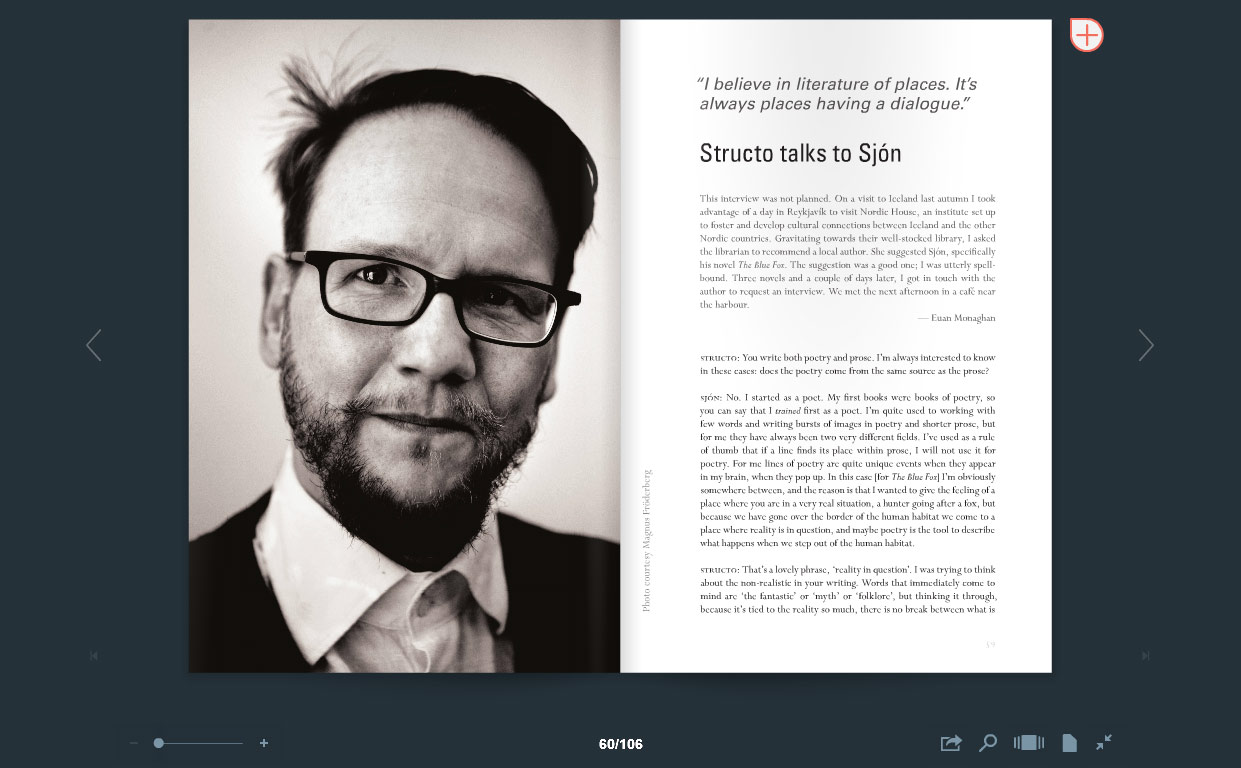
It’s been three months since the print edition of issue 13 hit shelves and doormats everywhere, and so as usual we have now released it online to read for free over at issuu. Try it on your tablet if you have one—it works really well.
In case you missed the launch, this one features “eight short stories, 14 poems, a piece of creative non-fiction, and two interviews—one a conversation with the Icelandic novelist Sjón and the second a dialogue between Faber New Poets Zaffar Kunial and Will Burns”. You can find more details, and some bonus material from the issue over at the issue page.
If you like what you read and want to support the magazine, the most valuable thing you can do is tell someone about it, as magazines like Structo thrive by word of mouth. If you’re feeling particularly generous, we would of course be delighted if you subscribed or donated, but getting this wonderful collection of writing read by the most people possible is priority number one, so share and enjoy!
— Euan
Review: The Combover by Adrián N. Bravi
 If you watch any American television, you may well have noticed that it features a lot of bald or balding men: Tony Soprano (The Sopranos), Louie (Louie), Pete Campbell (Mad Men), Homer Simpson (The Simpsons), Larry David, (Curb Your Enthusiasm), Walter White (Breaking Bad). These are characters in TV shows that often deal with the fading power of the American male, what A.O. Scott has called “the end of male authority”.
It is not coincidental that they are balding.
Going bald is something that no man, no matter how powerful, has any control over. It happens, as far as we can tell, actually because of maleness. And, even worse for our poor middle-aged men, it will be noticeable, and often the cause of societal judgement and public shame. Baldness is a visible signifier of decay, of loss of virility, of loss of relevance, of loss of cool, of loss of power. It’s a reminder, every time a balding, tufty skull is glimpsed in a mirror, of a whole range of male anxieties. (There are exceptions of course, often in film: Vin Diesel, for instance, has a head as hairless and shiny as the rims of any of the sports cars he drives out of skyscrapers, and he never seems particularly anxious about his masculinity.)
I think of all these bald patriarchs as I read The Combover, a novella written by the Argentine-Italian author Adrián N. Bravi and translated from the Italian by Richard Dixon. It was published in English by Frisch & Co in 2013 and, as the title suggests, is about a bald man, in this case a professor called Arduino Gherarducci. Gherarducci has developed an elaborate philosophy of baldness. He asserts that it is a mark of pride: “We bald people want to show off our baldness, the humble condition to which we are reduced”. This showing off is a game of concealment, and, just as baldness is a lack of hair, Gherarducci’s pride in his baldness shows from his lack of bald patch, kept out of sight beneath a stylised combover. The combover is a means of giving his appearance “dignity and elegance”, but with honesty. Revealing the bald patch is pathetic, thinks Gherarducci, while shaving the head is disdainful:
I’m proud to belong to a family of combover men, none of whom have ever fallen into the reprehensible trap, so common in our impulsive modern world, of shaving his head to mask his healthy and inevitable baldness. How much shame there is in this new century! How can we fail to see that this change from the combover to the shorn head is a sign of our declining society?
To attempt to conceal the baldness with hair is honest because it is doomed to failure: the combover will always betray itself, and will never pass as ‘natural’ hair. Indeed, throughout the novella characters comment on just how unconvincing Gherarducci’s combover is, unsurprising given his method of “letting the hair grow at the back of the scalp and then training it forward for the necessary amount of time” before combing it forward, like an inverted eighties popstar. The failed artifice of the bald man’s combover, like the holy man’s stigmata or the ascetic’s hairshirt, is a mark of purity and holiness, of submission to a higher power.
This is just the philosophy; in practice, having a combover has far fewer advantages, and frequently results in embarrassment. But the philosophy is what Gherarducci clings to as a means of retaining his sense of importance and self-worth, which is challenged on many fronts by insolent barbers and hirsute students and mothers-in-law who borrow books without asking and never return them. Gherarducci feels anger at these affronts, but he does not direct this, for the most part, at the transgressors, or at the society that, decadently, has stopped appreciating the artistry of the combover. Rather, it is turned against his fellow bald men—against those who suffer the indignity of baldness, but hide it with plugs or hats, or, worst of all, shaven heads, as if their baldness were a choice. Gherarducci finds it difficult to express his anger at others’ failure to follow the code as strictly as he does himself. He is angry at the world’s inability to realign itself to his philosophy.
One of the inevitable consequences of this focus on an unwritten code, and this over-interpretation of minor details in relation to it, is a kind of paranoia. It is this paranoia that bursts forth from Gherarducci at The Combover’s moment of crisis. A student, “a boy with sideburns and long hair” who is “the son of an Argentinian consul” humiliates Gherarducci while he is giving a lecture:
…he pushed back my combover with a gesture that was deliberate but not aggressive—indeed it was almost elegant—exposing my baldness to the whole class. For a few seconds the students sat there looking at me, astonished, without understanding the insult. Then, predictably, they all began to laugh.
The students cannot understand the insult, because they do not understand Gherarducci’s philosophy. However, they understand his shame, so they laugh. Not heartily, in truth; they do not really seem to care. Gherarducci does not know how to react. He continues the lecture. Afterwards, he lets the students leave, staying in the class in an attempt to hide his humiliation (a kind of dishonesty he would not allow himself with his hair). Then he decides to flee, ending up in a town in north-central Italy called Cingoli. As he travels there, “Every passerby had become a potential hair ruffler”. His acute attention to an anxiety about his combover overflows into paranoia.
Gherarducci’s time in Cingoli is spent as a brief and unsuccessful hermit. He walks from the town into the mountains. He asks, “…how could I apply my knowledge of bibliographic data exchange formats up here in the mountains?” He does not find a satisfactory answer. He is discovered by some local children who start a rumour that his combover, if rubbed in the right way, can bring good luck and heal the sick. Soon his cave is filled with pilgrims, eager to stroke his increasingly greasy hair. Gherarducci is unconvinced of the healing efficacy of his combover, but he goes along with it, perhaps because he is glad it is finally getting the kind of reverent treatment he had always hoped it would. Eventually, though, enough is enough, and he flees again: “My combover was created for another purpose, and I couldn’t allow it to become a healing instrument for a band of lepers.”
At the end of the novella, Gherarducci seems to feel rejuvenated and powerful, but we have seen him so often that we are incredulous. During his time on the mountain Gherarducci tries to gain authenticity and balance, to become self-reliant, to find, perhaps, a semblance of old-fashioned masculinity in the rhythms of a pre-modern life. His failure is farcical. He cannot survive on his own, and lives parasitically off his purchases in the town and off the lasagne the combover-stroking pilgrims bring as gifts. His encounters with nature—with deer and storms and a cave he briefly contemplates whitewashing—like his encounters with humanity, end in humiliation. Gherarducci’s masculinity, then, even at its most triumphant, is a posture of deliberate failure. Gherarducci himself seems unaware of this, but he should not be, for the nature of his masculinity’s failure is the same as that of his combover: his masculinity is a pose that reveals its own disappointments, just as his combover proudly emphasises his baldness through failed concealment. It is an absurd construction, an artifice of self-contradiction, and absurdity runs through The Combover, albeit muted by Bravi’s style, which deploys flat irony throughout. This flatness muffles the effect, and The Combover never develops the comic exuberance of, say, ‘The Nose’ by Nikolai Gogol, another story that uses an errant body part as a metonym for male insecurities. Masculinity is examined yet again, and comes out lacking. Like Gheraducci’s combover, the novella itself is an artifice of self-contradiction. It lavishes attention on a topic by now so threadbare that nothing can protect its modesty.
Gherarducci persists with his combover, even though it continues to fail, even though it continues to bring him unhappiness, even though his combover is a promise of elegance that can never be obtained and his masculinity is a promise of power that is looking more and more like an anachronism. As Gherarducci, so Tony Soprano, so Walter White: if only these men could realise their masculinity makes them look as old and absurd as their baldness.
— Tim
Tim Kennett is a writer who lives in London. Follow his Twitter feed here.
The English translation of The Combover was published in 2013 by Frisch & Co.
Reading The Stanley Parable

We can’t get enough of stories which refuse to play by the rules, or which make us suddenly realise we had no idea what the rules were in the first place. Some very interesting, not to say entertaining, narrative experiments are happening in the world of video games—we talked about this a bit with game designer and former Structo alum John Björling a few weeks ago—and here guest contributor Katalina Watt sets out to illuminate one such experiment. Meet Stanley.
The Stanley Parable begins with a narrated cut-scene, a cinematic sequence in which they player can only observe the video game environment. In a classic voice-over by a seemingly omniscient narrator, the player learns about Stanley, an office drone who receives orders on a monitor and spends his life mindlessly pressing buttons.
This might be a familiar situation for many gamers.
The player controls Stanley as he investigates the mysterious disappearance of all his co-workers in the office, but the game’s plot is more a device to highlight conventions of the gaming medium and subvert the player’s expectations. No one actually cares what’s happened to the other office workers. Instead, the game constantly provokes questions: Why is there a disembodied voice narrating game play? Why doesn’t Stanley ever speak? Why are we so willing to do as the Narrator tells us?
Stanley is a silent protagonist; his thoughts, actions and back-story are relayed only through narration. This is a common trope in video games, the idea being that this allows the player to embody the protagonist and increase immersion. Through a first-person perspective of a silent protagonist, the player is given more freedom to make their own in-game decisions, rather than act according to the protagonist’s personality. Of course in The Stanley Parable, it’s not that straightforward. The narrator often points out oddities of the in-game environments, such as doors automatically closing behind you or the fact that you can’t see Stanley’s feet. You feel foolish when the narrator points it out, but you’re still compelled to look down. There’s a fascinating, self-fulfilling quality to the narration. If the Narrator says Stanley is confused, you wonder why. The Narrator is the story’s creator, the ultimate author-god.
Through the game, the player can choose from many possible outcomes, ranging from blind obedience to every one of the Narrator’s orders, to complete disregard of everything he advises the player to do. There are multiple branches which allow the player to affect the game’s outcome, and diverge from a linear narrative structure. These multiple endings result in various outcomes for the protagonist, some of which are hilariously inane, such as a four-hour mini-game which asks the player to prevent a cardboard baby from being consumed by flames, while others are downright cathartic or involve chaotic confusion or gleeful resignation. Many players will want to exhaust all the possibilities of the game’s choices, and The Stanley Parable makes light of this with the parody ‘Broom Closet Ending’. There’s a broom closet environment that has no purpose or anything with which the player can interact. Lingering there prompts the narrator to impersonate the player discussing the merits of the ‘Broom Closet Ending’ and declaring it their favourite. There are so many permutations of the game, and one of the loading screens loops the phrase: “The end is never the end”. With The Stanley Parable, you can never quite be sure if you’re finished.
 In many games, player choices and narrative endings are often linked to moral decisions, with a spectrum of ‘good’ to ‘bad’ outcomes. The desire for freedom versus the pain of death is the dichotomy of good and bad endings in The Stanley Parable, but the game even undermines this. Death in games is usually used as a punishment for the player, as level progression is often lost. It discourages the player from diverging from the game’s plot and ‘not playing properly’. But in The Stanley Parable, even this is a tool for player disobedience and adds to the metafictional layers. In one of my favourite narrative branches, you disobey the Narrator to the point where it seems as though Stanley is about to be squished, when suddenly another narrator takes over the game. In this ending, I was amused and baffled to find myself in a museum environment which includes level models and artwork for the game, with heavy vibes of Marcel Duchamp’s ‘Fountain’ and questioning what counts as art.
As in all games, there’s nothing worse than getting stuck, and so in The Stanley Parable the player is rewarded for completing tasks with story progression and new game environments. But the game undermines this brilliantly in an ending that involves a countdown and a room full of buttons. Countdowns usually signal that a player needs to do something, and the Narrator relishes the chance to mock the player’s futile attempts to interact with everything in the game in an attempt to ‘win’ or ‘solve the problem’. Indeed the Narrator often restarts the game, sometimes resulting in exposed textures or distorted game maps. These things usually indicate glitches or that a game is still in beta testing stage, but here it is just another way of breaking immersion.
The Stanley Parable is a mod. A mod, short for modification, is an alteration of a videogame to make it behave differently. When the mod results in something completely different from the parent game, as in the case of The Stanley Parable, the result is known as a ‘total conversion’. At times The Stanley Parable pays homage to other games, such as Minecraft, an open-world sandbox game that encourages world-building and creation. The player is also given the chance to play a section of Portal. Portal was created by the game developer Valve, whose Source engine for Half-Life 2 was the basis for The Stanley Parable. Portal, like The Stanley Parable, features a silent protagonist, and relies on the player disobeying the narrator character to progress the storyline. This was a clever tie-in for Portal fans, as we’re used to being mocked by GlaDOS, who initially acts as the player’s guide.
While exploring major themes such as free will, the illusion of choice, and the futility of life, The Stanley Parable does so in a clever and humorous way. It doesn’t take itself seriously, but still manages to be poignant whilst also darkly satirical. Paying homage to its origins as a mod, the nuanced and surreal story-telling highlights and subverts video game conventions as well as literary ones. It’s a fantastic example of interactive fiction.
—Katalina Watt
Katalina writes novels and short stories and is a recent graduate of The University of Glasgow, where she dabbled in theatre and dance. Her blog on science fiction and fantasy can be found here.
Review: The Good Son by Paul McVeigh
 Should I be a loner? Or be in a gang.
Paul McVeigh’s ambitious debut pits the half-term struggles of a pre-adolescent boy in the tempestuous run-up to his first day of ‘Big School’, against the explosive, sectarian world of Belfast’s Ardoyne during The Troubles.
I have very clear instructions. Don’t go to the top of the street cuz there’s always riots. Don’t go to the bottom of the street cuz there’s no-man’s-land and there’s always riots. Don’t go near the Bray or the Bone hills cuz that leads to Proddy Oldpark where theu throuw stones across the road from their side. Don’t go into the aul houses cuz a wee boy fell through the stairs in one and broke his two legs. I think his neck too. Ma could be exaggerating. Oh and don’t go onto the Eggy field cuz there’s glue-sniffers.
Young Mickey Donnelly must tread carefully through the pock-marked and bomb-stricken landscape of McVeigh’s keenly realised early 80s Belfast backdrop. The poverty, paranoia, and violence that stalk this dangerous and seemingly foreign landscape are illustrated with shocking clarity, whether in the home or on the streets. These dangers are amplified for Mickey, a boy who hasn’t quite hit puberty, whose favourite film is alternately The Wizard of Oz and Grease, who dreams of a glamorous life away from The Troubles in that haven for expatriated Irish citizens, America. He is a boy whose closest ally is his little sister, Wee Maggie, and whose list of enemies includes, at one time or another, everyone in the vicinity, up to and including his father and brother. As one can imagine, the testosterone-driven and politically divisive world of Belfast in the 1980s is not the ideal place for a young Catholic boy to navigate while exploring his sexuality.
I look for sex in the index. Montgomery Clift—Mammy loves him. I turn to the page. Holy crap! I don’t believe he was gay…He was probably just nice. He went with men and women! I’ve never heard of that before. Is that what actors do?
But it is in this world that McVeigh’s winning narrator is found, a loner riding—to his younger sister’s disdain—a galloping ‘Cham-p-ion The Won-der-Horse’. Derided by his schoolmates and potential suitors for his soprano and his penchant for drama and show tunes, Mickey sets out to be a good son, the only way he knows how.
Though it could be said that the novel is a little over-fond of reinterpreting the kitsch and neon of the early 80s, McVeigh does not shy away from the challenge of depicting the brutality and trauma that reigned during an age of political claustrophobia and sectarian unrest. And perhaps more could have been made of Mickey’s ‘episodes’, the lapses in concentration outside of which many of the dramatic turns of narrative occur, but ultimately The Good Son delivers a real sense of a damaged child within a broken family constrained by his society, while also presenting a refreshing portrait of the troubles through the eyes of one of the most beguiling and endearing narrators I have encountered in a long time. McVeigh and The Good Son are destined for prizes.
— Phil
Phil Clement studied English and Creative Writing in Aberystwyth. Since he left there he has lived in a library, written short stories, and reviewed books. Currently he works as an assistant editor at Amberley Publishing. Follow Phil here.
Writing from every angle: An interview with Boris Glikman
 Boris Glikman’s fiction appeared in issue seven of Structo. We invited him to fill us in on what he’s been up to since.
Your work was on display for two months in Melbourne’s Federation Square. Can you tell our readers a little bit more about that project?
This project was created by a site for creative people called Pool (now, unfortunately, defunct) that was affiliated with Australia’s national radio/TV broadcaster, the ABC. I became involved with this site after I appeared on ABC’s Radio National in 2009, performing my poems and discussing their meaning. Pool ran a contest called ’30 Days of Creativity’ whereby its members submitted stories, poems, imagery, photos, pictures, paintings, videos, etc. every day for 30 days. The winning entries were chosen to be included in a ten minute or so video, which comprised a mix of works being shown in rapid succession, accompanied by electronic music. My vignette ‘The Rape of Reading’ was included in this video and it was actually the only written work that was included in the mix. All the other items in this video were of visual nature.
I think the judges of the contest, being creative people themselves, could relate to the sentiments expressed in my piece, namely, how writers feel when readers destroy the creations that writers work so hard to bring into being with their thoughtless criticisms. This video was shown for around two to three months on a giant screen in Federation Square, which is situated in Melbourne’s city centre and is where many of Melbourne’s biggest cultural events take place.
You adapted your short story ‘The mePhone’ for an anthology for children. The ‘mePhone’ isn’t particularly adulterated, so what aspects of it most needed modification? Was it an easy transition?
The children’s version of the story, whose full title is ‘Wally the Wombat and his mePhone’ is comprised of two fables ‘The Good Deeds of Kenny the Koala’ and ‘The mePhone’ that I combined into one. The way that I modified the original ‘The mePhone’ story to make it more suitable for children was to change it from having human protagonists to having animal protagonists, with corresponding changes in various details of the story. To give the story an additional Australian flavour, I made the animal protagonists native fauna, such as wombats, kangaroos, kookaburras, koalas, etc. So it was a pretty straightforward transition, with not that much to do really.
The original adult version of ‘The Good Deeds…’ has quite a dark ending that I think even some adults might find confronting. So I omitted that stark ending, and then added the modified version of ‘The mePhone’ as the second part of the ‘Wally the Wombat and his mePhone’ story. And so the story now has a happy ending, appropriate for children’s sensibilities.
You hold several academic degrees: philosophy, linguistics, mathematics and physics. How has this diverse background shown up in your writing?
I think that the influence of philosophy on my writings is clearly evident to anyone who takes a look at them. The influence of linguistics is a bit more subtle and probably manifests itself in the games that I like play with words and their meanings in my stories and poems. Regarding the influence of science, when I suddenly became creative at the age of 13, mathematics and physics were my first love. Writing, until relatively recently, was always the second choice for my creativity’s outlet. So what I am trying to say is that given that I also studied science in university, it is inevitable that there would be an influence of mathematics and physics on my writings.
I think this influence of science shows itself in a number of ways in my work. On a more overt level, the subject matter and the themes of my stories and poems often have allusions to mathematics and physics. For example, I am working on a suite of poems about various celestial objects, such as the planets, the Sun, black holes, the whole universe, etc. falling in the backyard of the protagonist. These poems are a mixture of science, fantasy, science-fiction, surrealism, mythology, philosophy and humour, and there are references to the physical properties of the celestial objects. On a more subtle level, I think that my scientific background does influence my thinking process and the way I go about creating the plot and development of a story. In fact, some readers have remarked that my stories have a mathematical structure and that they flow almost like a logical argument.
However, some time ago, I actually became quite disillusioned with science and its claim to be the great provider and source of Absolute Truths. I found science’s perspective to be too restrictive and reductive. Consequently in my writings, science is unshackled from its constricting chains of logical laws and is allowed to blossom fully into an opulent and multifaceted new incarnation, unbound by pedestrian reality.
What projects are currently on your plate?
At the moment I am working on two books with two different publishers, American and British, so that takes up a lot of my time and energy. Apart from the books, there’s the issue of experiencing what I call “a writer’s flood”, which is the exact opposite of a writer’s block, for I am constantly being inundated by new ideas for stories, poems, fables, parables, vignettes, song parodies, etc. As a result I have a backlog of about ten years of ideas that I haven’t had the chance to work on and expand into full stories, poems, etc. as yet. So this backlog of material exerts a constant pressure on me too, demanding that I give it time and attention. My plate is always overflowing and it is a constant challenge trying to stop it from spilling over into other areas of my life, as well as possibly ruining my shirt and pants.
–
Boris Glikman’s story ‘The Curious Story of Frank and his Friend Mr. Stims, the Hydrophobe’ first appeared in issue seven.
Amongst other things, Glikman has also had a parable translated into the unique whistling language Silbo Gomero, traditionally spoken by inhabitants in the Canary Islands to communicate across the deep ravines and narrow valleys. There doesn’t seem to be much from which he shies away. One of his performed song parodies can be found here. You can keep current with Boris here.
Photo of the Australian Centre for the Moving Image in Federation Square, Melbourne (CC BY-NC-SA 2.0) by Wojtek Gurak.
BOS Artists’ Residency Programme

A few weeks ago, we received an email from William Howell, introducing his new writers’ and artists’ residency programme, BOS Arts. As you might imagine, we get a lot of emails like this; many of them scatter-shot and sent BCC—if we’re lucky—to every editor there is. But not this one. This one was intriguing. There was an interesting story. We asked William to talk a little about the BOS Arts project, and how it came about. This isn’t an endorsement, but we think you’ll find it interesting all the same.
I have rather found myself here, with BOS Arts, and I have done so without any intention whatsoever. I guess it all started back in 2008. My father was killed in a plane crash in northern Mozambique on my third day at university. I was just 19. My dad was a former MEP and thus it was not just the turmoil of death I had to deal with, but the media and press and the expectations of what I thought he would want me to do. I failed. I think the worst by-product of bereavement was the fact I didn’t know anyone at university and thus I hid. I became a bit of a closed entity; I had one face behind the closed door of my digs and another for the outside world. As such, I knocked on a lot of wrong doors. I fell out of love with love after losing my dad. I resorted to drugs. I basically made decisions I regret. It was bad, it was dark, and this went on for five years, and got worse with each passing one. Eventually I got tired of the pain though, and I realised that you can’t rid yourself of darkness by fighting it with darkness.
In November 2013 I wrote a note to myself in a bid to get over his death and carry on with my life. This note turned out to be 93,000 words long. Thinking this ‘note’ could help people, I spoke to a few agents and publishers, but was scared their proposed changes would rip the heart out of my book, and so in February 2014 I ignored all conventional wisdom and released it on the Kindle. It picked up some traction pretty quickly: I did some BBC interviews and had newspapers pick it up, as well as the likes of Sir John Major and Stephen Fry, and in April it became a number one bestseller on Amazon, and subsequently available in paperback. I’ll be the first to admit it wasn’t the most well-written book, but it was from the heart and because of that I got to help people suffering with the silent battle of bereavement. That was worth every tear I shed writing the book.
Since its release I have written a few more books and some short stories, am about to begin a YA project set in Africa, and now I find myself pushing BOS Arts, wanting to encourage others to stick with their creative expression because it can be worth it.
I adore writing. The poetry of it. The way the English language has a word for everything, even every fear, it’s a big puzzle to me. But it’s also a world with very few rules, other than those of George Orwell. It allows polar styles to share a bookshelf, J.K. Rowling to the Beat Generation. That is what it’s all about. I believe anyone can write; it’s just a matter of sitting down and bleeding.
As such I have found myself looking at writer residencies a lot. The idea of somewhere quiet and inspirational to collect my thoughts and write them down, whether a novel or poetry, just intrigues me and plays to my method of writing. The only thing is, each residency I found was exclusive to people with established careers or signed-on publishers, and even if I managed to discover one that was ‘open to all’ I doubted I was good enough to be chosen (I’m a writer after all, self-doubt comes with the territory). That sort of revelation makes me act, and this time it made me want to establish a residency aimed strictly at new, up-and-coming or unpublished authors, as a means of providing a thin film of encouragement to those that deserve it.
I was lucky to have had a lot of encouragement on my journey, but I also hit a lot of big and thick walls topped with barb-wire. I have been told to find myself a safe job and pack up the daydreaming. I’ve questioned my pride after dealing with egotistical agents that wanted their self-importance massaged before looking at a manuscript (luckily most agents are beautiful beings with an equal passion for words, people who encourage and not belittle). I’ve hit patches of self-doubt after receiving a bakers’ dozen rejection letters. Being a writer means there are an awful lot of ditches hidden along the yellow brick road of hard work and hope, enough to stop you writing at times, and as such I wanted to provide a means of encouraging new writers and poets and artists to believe in themselves, to come to a place where I have always sought refuge, a place so beautiful that it has healed my soul as much writing poems has been able to. People seldom stumble across this place, and that is what makes it so special, for our May’s Way residency is truly a magnificent place, and I want to share it with people. I want to provide storytellers and healers with somewhere inspiring to collect themselves and create something that they will be proud of, whatever the topic. That is where I find myself now. That is where BOS Arts was born from.
We are accepting applications for the Spring 2016 May’s Way residency until late September. The application process itself is very open. We don’t want to close the door on any creativity. We want this place to inspire something in our residents as much as we want our residents to inspire something in us. The applications can run wild basically. With regards to our panel, all writing applications will be assessed by Briony Bax and Ambit magazine, whilst the artist applications will be assessed by Jolyon Mason and Storm Fine Arts. I am also on the selection committee for all applications.
Writing can be as mundane as Bukowski’s Post Office or as far-fetched as Pynchon’s Gravity’s Rainbow. We adore writing, whatever form or genre or style. With regards to artists applying, we would like the artists to use what this coastline offers as inspiration for their work. How they do so is not limited. I myself appreciate landscape paintings, whether done with oil or watercolour, or even spray paint, whilst Jolyon Mason focusses on art that pushes the boundaries, a means of mixing traditional styles with contemporary and modern, whether decorative or fine.
More information about BOS Arts here. Photo courtesy Gary Pearson.
An interview with Paul McVeigh
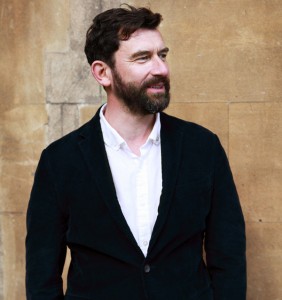 We love Paul McVeigh. The man’s a fixture of the British short story world and, along with Word Factory co-conspirator Cathy Galvin, a long-time supporter of the magazine. And so we were delighted to learn that he had a novel coming out with one of our favourite publishers, Salt. We will be publishing our review of The Good Son in a few days (and it’s an achingly fair review too—our reviewer had no idea about the connection), but in the meantime, here’s a few words from the man himself.
Was The Good Son the first novel you wrote, or do you have a couple of earlier attempts sitting in a drawer somewhere?
Yes, it’s my first novel. I’ve known a few writers who have two or three novels that didn’t make it, some completed and sent out, but I come from the other stock – those that have been bashing about at the same piece of work for many years. There were breaks where I left it in a drawer for years but in the end I always came back to it. The published version is quite different to the others as I became a better writer and the message of the book reflected more of my understanding of the world too.
You grew up in Belfast. What made you draw on this setting for the book?
Initially, I had the desire to write about my generation, children who had lived in Belfast having known nothing else but the Troubles. I wanted to reveal their day-to-day lives, going through all the normal growing pains whilst living in extraordinary circumstances. I also wanted to write from a place of authenticity and absolute authority over my subject matter. This was crucial to me as a first-time novelist for practical and philosophical reasons. I’ve always had this passion for writing realism – to make the page come alive, to be as believable as possible.
Did Mickey’s story begin as a novel?
It began as a short story. An editor had seen a play I’d written and approached me to write a short story for an anthology. I had no idea what I was doing. I’m so glad he did, as it changed the course of my life. The story was about a little boy going to see his aunt and something awful happens to him there. The aunt and the events of this story didn’t make it into the final version of the novel but two small sections did.
You’ve written—and been published—across a bunch of written forms now. Do you have a favourite way to tell a story?
Not as such. I have moved through forms over different periods of my life, with the exception of the novel which I kept going back to. Perhaps the forms reflect where I am at or the way I’m engaging with the world at any given time. It will be interesting to see what happens next. I feel a change brewing.
Along with Tania Hershman, Cathy Galvin, Nicholas Royle and others, you’re a real champion of the short story in the UK. How did that come about?
When I returned to writing after a long break, short stories were the perfect form for me. Like writing plays, I could hold a whole piece in my head, and could see the through line clearly. I started investigating the form, reading stories, interviews with great writers, sought out live events to listen to authors read and discuss their work, seeking out opportunities for publication and other practical information. I put all this into a blog and I enjoyed the engagement with other writers it brought. Every avenue I took seemed to feed into the other and my passion seemed to take on a life of its own until I felt deeply involved in the short story world. Working with Word Factory and London Short Story Festival took that engagement offline and into the world.
Any exciting recent discoveries in the world of the short story?
I loved reading Laura van den Berg recently and am really looking forward to KJ Orr’s collection. I love Rebex Swirsky’s writing and hope to see a collection of hers come out. Dannielle McLaughin writes beautifully. I’ll be looking out for Rob Doyle’s collection later in the year too.
–
The Good Son is out now, published by Salt. Photo of Paul courtesy Roelof Bakker.
Whatever you take away is yours: An interview with Ethan Chapman
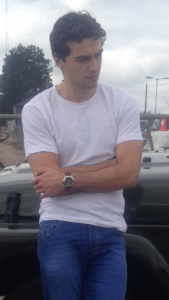 As part of our project to keep up with former Structo contributors, we recently spoke with issue 11 author Ethan Chapman.
What are you currently working on?
At the moment I’m working on a few short stories that I’m submitting to magazines as well as sending off to competitions. I’m also trying to write a novel (of course!) from one of my short stories, after an agent read one of my published stories and wanted to see if I‘d be interested in turning it into a novel. I’m also taking acting lessons and I’ve also got ideas for a play as well as some short films that I’d like to write and act in. Trying to keep busy!
In issue 11 you mentioned a potential project influenced by your work at the Trainstation Gym. Anything in the works there?
The idea about the Trainstation Gym has been talked about a few times with my friend Mark who owns it. We’d love it to be a TV series in the vein of Clocking Off. We’ve thrown some ideas around but they’re just ideas at the moment, but hopefully we can get these ideas together and put them into some sort of order and go from there. It would be great if we could. So far we’ve got some rough ideas about characters as well as a few storylines about bodybuilding and powerlifting contests as well as a few extra marital affairs. We’re going for drama in every sense of the word!
Your short story ‘Long Distance’ seems to have one carefully-placed foot in magical realism. How do you feel about that categorization?
Yeah I think that’s a fair assessment. I just love the ordinary mixing with the extraordinary or the abnormal. I guess I’m quite interested in how easy you can become detached from the world as you know it and how your thoughts can then become warped and everything around becomes strange. Like The Doors song: “People are strange when you’re a stranger…” It manifests itself in so many ways. The way you can get caught up on someone you like, for instance, and every look they give and everything they say you obsess over. How quickly thoughts can turn obsessive and detach you from what you’ve thought as normal up to that point. I like authors such as Kafka, Julio Cortazar, Haruki Murakami, Nikolai Gogol, where they write about these strange things happening and it’s just accepted as part of life and not feeling the need to address it, to explain it. Though I do remember reading recently ‘The Invention of Morel’ by Adolfo Bioy Casares where the mystery is explained at the end, and it’s just brilliant!
[In ‘Long Distance’] I remember I didn’t explain why he was receiving phone calls in the story and a few good friends who read it asked me “Was he perhaps suffering from mental illness? Did it happen at all?” One of my good friends came to his own conclusion that he probably just wandered into a neighbour’s house! I didn’t give an answer one way or the other, and it’s really amazing as a writer to have your work discussed like that. My friends would ask me to tell them what was actually happening and I’d tell them whatever they thought was right, because I think whatever you take away from it is yours. Your interpretation is all that matters.
Does music influence the way you write?
Yes, music influences my writing quite a bit. Not as in I listen to music, because I like to write in silence, but I might hear some lyrics in a song and suddenly have an idea for a short story or a line for something that either starts off a story or fits into one, or that I’ll write down and save for something else down the line. I’ll hear some lyrics by Ryan Adams or The Doors or bands such as Uncle Tupelo, Wilco, Big Star, Semisonic, The Lawrence Arms, Against Me!, and I’ll suddenly have an idea.
How did you find Structo?
I think I found Structo on a list of literary magazines that an article said were doing really good work and that I should submit to. I can’t remember where the article was now. I think it was a top five, possibly. But Structo was a magazine that I submitted exclusively to for a couple of years before I got accepted. I remember eventually getting an email saying one of my stories hadn’t been accepted but that it was getting closer to what Structo liked, which made my day even though it wasn’t accepted! Just that validation of progress, knowing that I was getting closer to something.
But back then I was writing short stories but not reading a lot of short stories, not enough anyway, and then I remember reading ‘Airships’ by Barry Hannah and just thinking wow. It was unlike anything I’d read before. I’ve always been into a lot of Southern literature, writers such as William Faulkner, Flannery O’Connor, Joe Lansdale. I’ve always loved things set in the south, whether it be the UK or America. Maybe because I live in a rural area and I love the laid back atmosphere of it all. But ‘Airships’ really got me into writing short stories, just for the way he wrote; every sentence seemed to have something mischievous and electric humming through it, grotesque but also funny and literary and confusing. After that I began to read short story collections more and more, things like Voodoo Heart by Scott Snyder, Brief Interviews with Hideous Men by David Foster Wallace, The Illustrated Man by Ray Bradbury, I Hate To See That Evening Sun Go Down by William Gay, Welcome to the Monkeyhouse by Kurt Vonnegut, Werewolves in their Youth by Michael Chabon, Sixty Stories and Forty Stories by Donald Barthelme… I love them. I’m always searching on Amazon and clicking “Customers who bought this item also bought…” and getting sidetracked scrolling, getting lost down that rabbit hole of similarly bought books. You can spend a lot of time doing that, let me tell you.
What are you currently reading?
Currently I’m reading Dogs of Winter by Kem Nunn. It’s a surfing noir, I guess you could say. He also wrote an amazing book called Tapping the Source, which apparently was the basis, at least initially, for Point Break. He’s a brilliant writer. I just devour his books. I’m also reading Dangerous Laughter by Steven Millhauser, Omnibus Vol. 1 of Brian Michael Bendis and Alex Maleev’s run on Daredevil, as well as David Foster Wallace’s A Supposedly Fun Thing I’ll Never Do Again, George Saunder’s Tenth of December and Rick Bass’s Lives of Rocks. I might be reading too many books, maybe.
But I also have a list of authors I repeatedly go back to. Haruki Murakami is one of these, and I remember a few years ago reading The Wind Up Chronicle and Norwegian Wood and looking up from reading both of these and starting to see the world a little differently. He does that to you. I think that’s why he’s so popular. I also love Richard Brautigan, who can be funny and weird, such as in Sombrero Fallout, The Abortion, and The Hawkline Monster, but who can also be heart breaking such as in So The Wind Won’t Blow It All Away. James Crumley I like a lot—The Last Good Kiss is just perfection. Ray Bradbury, whose style is completely his own in Something Wicked This Way Comes, is just fantastic. I read a lot of Joe Lansdale. It doesn’t take me long to get through one of his books. His Hap and Leonard series is brilliant, but his other books such as Cold in July (which was recently made into a brilliant film), The Bottoms, and A Fine Dark Line are also fantastic. I go back to these writers again and again.
What’s one thing our readers may not have learned about you from issue 11?
Oh wow, what do people not know about me? Umm… Well, as you can see from me reading Daredevil at the moment, I’m a big comic book fan. Huge fan. Preacher and Y: The Last Man are two of my all-time favourites. I remember picking up an issue of Preacher in the newsagent when I was about seven or eight, I think, and reading it out of context because it was issue five or something, and then getting into comics again when I was about fourteen or fifteen and buying the first trade of Preacher and finding that issue in it! I remember thinking all the way through the issue “this feels familiar, that I’ve read this somewhere, I know I have”. Then it hit me. I also love Rachel Rising by Terry Moore and Hawkeye by Matt Fraction and David Aja. Anything by Brian K. Vaughan, Ed Brubaker, Scott Snyder… The list just goes on and on.
I’d also like to say that when you accepted my story ‘Long Distance’ in issue 11, it really gave me confidence in myself that what I was doing was worth reading. Up to that point I wasn’t sure if what I was doing was good or just okay or awful! I was finding it hard to look at it objectively. Then ‘Long Distance’ was published and I was ecstatic, and a couple months after that, with the confidence I now had and with writing every day, I entered the Frome Short Story Competition and had two stories make the longlist, of which one made the shortlist and came in runner up. The runner up story was called ‘Home Is Where We Are’ about a boy who watches his sister get abducted and was subsequently published in issue 11 of Popshot magazine, another brilliant and beautiful magazine! On top of this, I also had a flash fiction collection longlisted in the Bookimbo Flash Fiction Competition and had two poems published in Agenda magazine and Firewords Quarterly. That was all last year, so I have to say it was a good year! Without Structo I’d never have had the confidence to do it. You were the launching pad. So thank you all again!
Follow Ethan on Twitter and read his issue 11 story ‘Long Distance’ here.
New Prospects: An interview with Benjamin van Loon

The latest in our series of interviews with former Structo authors features Benjamin van Loon, the editor-in-chief at the newly reimagined literary organisation Anobium.
What are you currently working on?
I’ve got a buncha stuff in the works. Biggest thing on my plate right now is finishing up my masters degree from Northeastern Illinois University. I wrote a big thesis project on cult film culture and that’s where most of my attentions have been directed over the past year or so. But I also recently wrote a short creative nonfiction piece recounting a failed social experiment I was involved in a decade ago, and I’m currently shopping that one around to various publishers. And when I’m not working on anything else, I have an experimental novel continuing to broil. And as always, I’m planning what’s next for Anobium.
Your issue eight short story ‘Mt Prospect’ is set in Chicago, which is also your hometown, correct? Has this area been fertile writing ground for you?
I grew up in the Chicago and then the Milwaukee suburbs, and I’ve been living in Chicago proper for almost ten years now. I’ve been a life-long Midwesterner (though I’m not sure if I’m proud about it), so in a way, I’ve had no choice but to be influenced by the region. It’s part of who I am, so it seeps into my writing. There’s a stoic worldview that defines the American Midwest, and especially Chicago. We’re trapped inside five months out of the year, and the only way to pierce through that choking cloth is with a healthy dose of bleak humor. It works.
‘Mt Prospect’ might be categorized as flash fiction. Have you found readers open to this short form, or has it been difficult to place?
I think flash fiction is suited to our shortening attention spans. There can be no digital-age Dostoyevskys, so creative writing needs to adapt. Flash fiction is a good answer to this, and I enjoy writing it, but the irony is, as a reader, I don’t have much patience for it. I like extended wordplay, depth of character, originality of narrative, but this is the stuff of novels, and who has time for that when Agents of S.H.I.E.L.D. is on Netflix?
What are you currently reading?
As a writer, I’m not supposed to say this, but at the moment, I’m reading nothing. My intellectual appetite suffered from surfeit in grad school and my shelves are lined with books and journals on film, media studies, philosophies of technology, and communication theory. A non-stop diet of that is a recipe for reader burnout. But I do have some stuff in my queue, including work by Loren Eiseley, who has become increasingly meaningful to me. I also recently finished Food of the Gods by Terrence McKenna, because I’m a good Millennial.
What’s one thing our readers may not have learned about you from issue eight?
For the first time in many years, I feel hopeful.
Benjamin van Loon’s short story, ‘Mt Prospect’, was originally published in issue eight and can be found here. Find out more about Benjamin and his other writing here. This summer, be sure to tune into Anobium for a plethora of new projects.
Posts pre-April 2014 are here.